
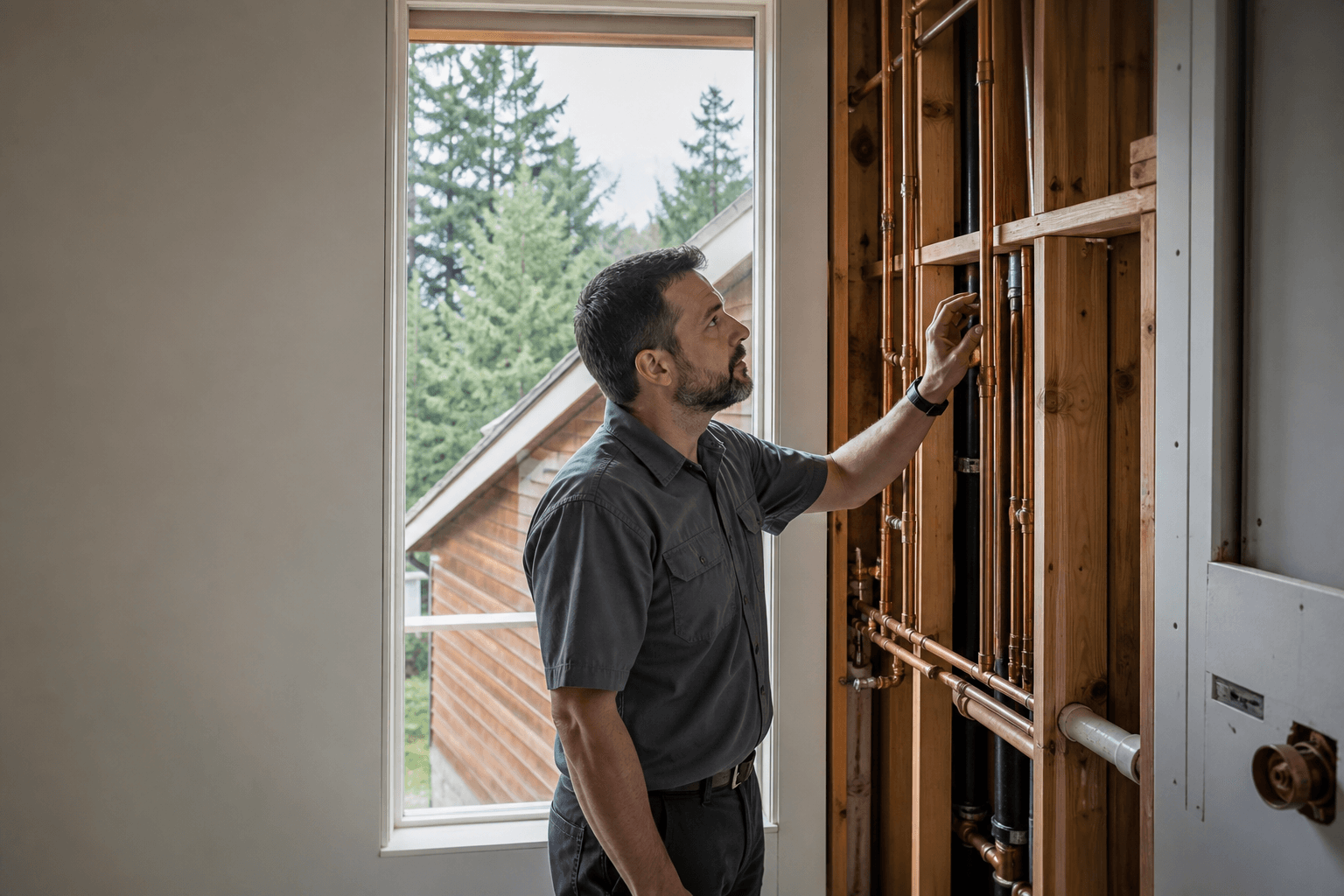
Polybutylene pipe — almost universally called poly B in the plumbing and insurance industry — is a grey plastic piping material that was used extensively for residential water supply lines across Canada and the United States from the late 1970s through the mid-1990s. In British Columbia, the Lower Mainland saw particularly heavy use of poly B during the building boom years of the 1980s and early 1990s. If you own a Burnaby home built during that period, there's a good chance your supply lines are made of it.
Why Poly B Was Installed
Poly B had a lot going for it when it was new. It was flexible, which made it easier to route through wall cavities than rigid copper. It was significantly cheaper than copper, which was an attractive selling point for developers and builders operating on tight margins. It was lightweight, quick to work with, and it passed the building code requirements of the era. By the mid-1980s, it was the default choice for residential plumbing in a large portion of new construction across the Lower Mainland.
Why Poly B Fails
The problem with polybutylene pipe isn't immediately visible — it happens inside the pipe wall. The primary culprit is chlorine. Municipal water supplies use chlorine as a disinfectant, and Burnaby's water supply is no exception. Over years of exposure to chlorinated water, the interior of poly B pipe undergoes chemical degradation. The pipe walls become brittle, developing microscopic cracks and, eventually, visible failures. The situation is often worse at the acetal plastic fittings — the small grey or white plastic connectors at tees, elbows, and fixture connections — because the acetal material is even more susceptible to oxidant attack.
This degradation is invisible until a leak starts. There's no external discoloration, no bulging, no warning sign on the outside of the pipe. Homeowners often discover poly B failures when a slow leak has already soaked into a wall for weeks, or when a fitting cracks and releases a sudden flow of water.
The Age Problem in Burnaby
Burnaby's poly B plumbing is old. Homes plumbed in 1985 now have supply lines that are over 40 years old — well past the point where the risk of failure is theoretical. The acetal fittings in many Burnaby homes are at the end of their expected service life. An inspection that shows "no visible issues" today is not a guarantee of no issues next month.
What to Do If Your Burnaby Home Has Poly B
The answer is replacement — but the right timeline depends on your specific situation. An insurance requirement gives you a deadline you have to meet. A pre-sale scenario requires completion before closing. A proactive homeowner who isn't yet under pressure from an insurer can plan the project on their own terms. What doesn't make sense is ignoring it. The cost of a poly B pipe replacement in Burnaby is a fraction of the cost of the water damage that follows a failure, and the insurance consequences of having uninsured water damage are significant.
Call a licensed poly B plumbing specialist, have the pipe inspected properly, and get a written quote for the replacement. That's the starting point — and it's less disruptive than most homeowners expect.