
Poly B Plumbing Inspection — Know What You're Dealing With
Detailed visual and pressure inspection of your existing poly b piping to assess condition, urgency, and full repipe scope.
Before you can plan a poly B replacement, you need a clear picture of what you're dealing with. Our poly B plumbing inspection gives Burnaby homeowners, buyers, and strata councils the detailed assessment they need — identifying every run of polybutylene pipe, evaluating its condition, and producing the written report that insurance companies and lenders actually require.
Not every home in Burnaby's 1978–1995 building stock has the same extent of poly B plumbing. Some homes were fully plumbed in polybutylene; others have partial poly B in specific areas like bathrooms or the hot water distribution system, with copper elsewhere. Without a professional inspection, you don't know what you have, how urgent replacement is, or what a complete repipe will involve.
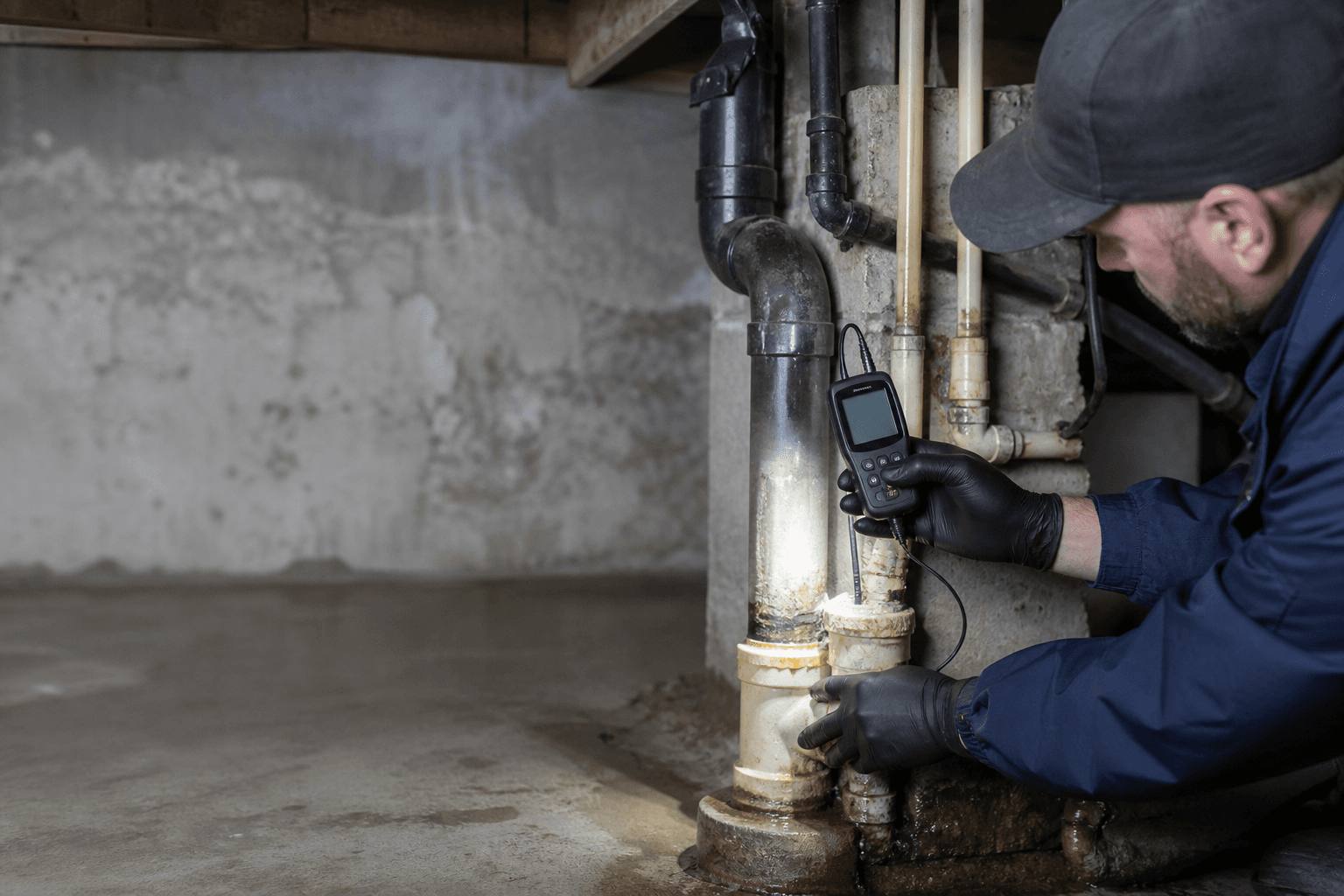
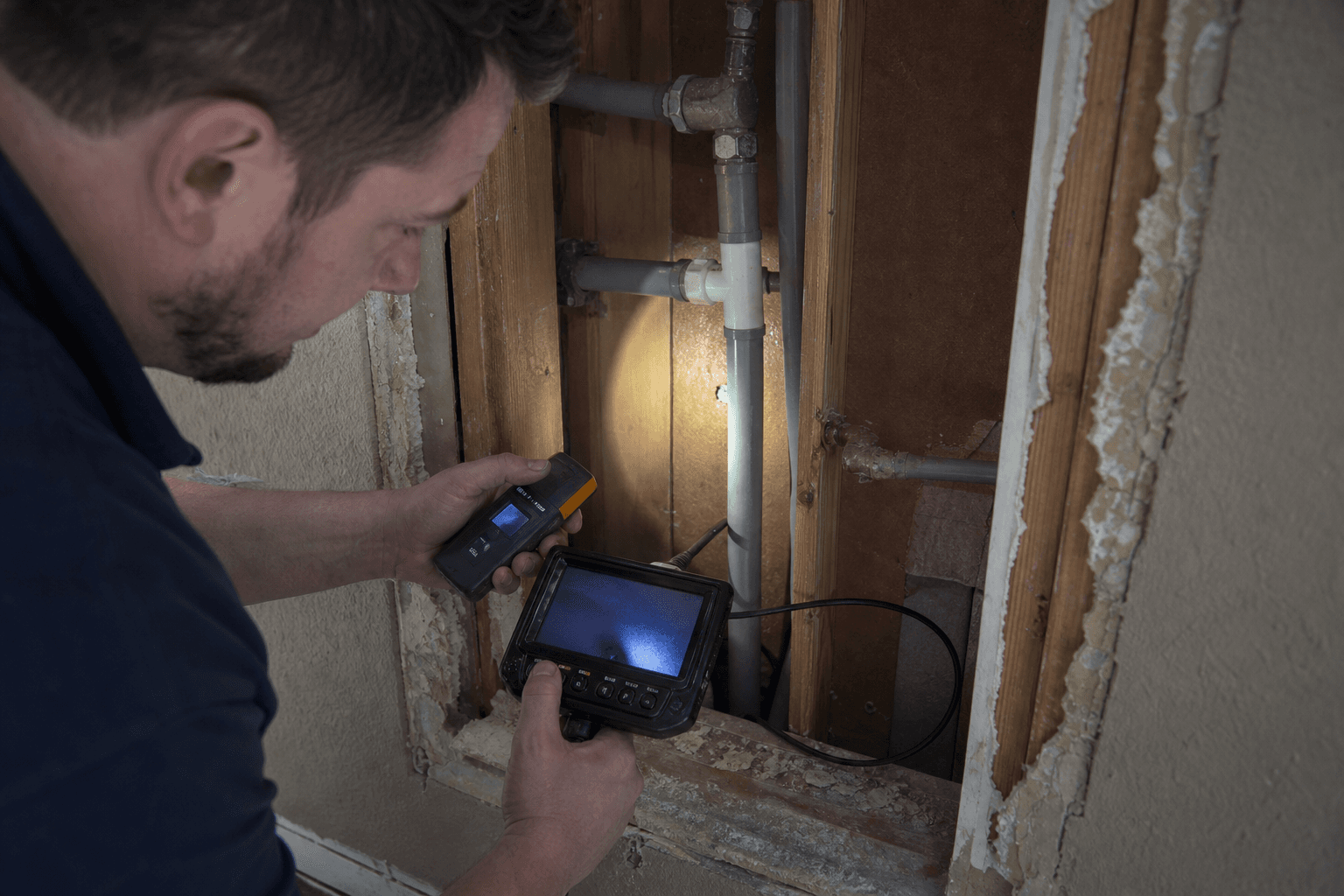
Our inspection process covers every accessible area of the home: mechanical room, crawl space, utility spaces, under sinks, behind toilets, in attic access areas, and any exposed supply lines in unfinished spaces. We use moisture meters to check for evidence of past or ongoing leaks behind walls and under floors. We assess the condition of fittings — the acetal connectors are often the first component to fail — and note any discoloration, brittleness, or distortion that indicates advanced degradation.
The inspection report includes photo documentation of all poly B piping found, a condition assessment, and a recommended replacement scope. If you're a buyer receiving this as part of a pre-purchase due diligence process, the report is written in plain language your lawyer and insurer can follow. If you're a homeowner responding to an insurance requirement, the report meets the documentation standard that BC insurers and underwriters expect.
We also tell you honestly if a full immediate repipe is urgent versus what can be monitored. Not every poly B inspection ends in the same recommendation — condition varies, and you deserve an honest assessment, not a sales pitch.
What's Included — Polybutylene Pipe Inspection & Assessment
- Visual and moisture inspection of all accessible poly B plumbing
- Acetal fitting condition assessment
- Photo-documented report for insurers and lenders
- Clear scope and urgency recommendation
- Suitable for pre-purchase, insurance compliance, or proactive planning
- Burnaby and all Metro Vancouver communities
Book your poly B inspection in Burnaby today. Get the documentation you need before your insurance situation becomes urgent.
Get a Free Quote
For polybutylene pipe inspection & assessment in Burnaby and Metro Vancouver.
Related Services
Common Questions
Poly B Pipe Replacement FAQ — Burnaby & Metro Vancouver
Everything homeowners ask us about polybutylene pipe replacement, insurance requirements, and what the process involves.
Does poly B piping need to be replaced?
Yes. In British Columbia, poly B has been flagged as a high-risk material by virtually every major home insurer — meaning you either replace it on your schedule, or your insurer forces the issue on theirs. Beyond insurance, the material has a well-documented failure mode: chlorine in municipal water gradually embrittles the pipe walls from the inside out, and the acetal plastic fittings are prone to sudden cracking once they've aged. There's no reliable way to inspect poly B for internal deterioration without cutting it open. If your Burnaby home was built between 1978 and 1995, the pipe is now 30 to 50 years old, well past the point where most plumbing engineers consider it low-risk. The question isn't really whether to replace it. It's whether that happens on your timeline or after a flood.
When was poly-B piping banned in Canada?
Polybutylene pipe was never banned through a single piece of legislation in Canada — it quietly lost its approval in provincial plumbing codes through the late 1990s and early 2000s. The turning point came in the United States, where a $950 million class action settlement in 1995 (Cox v. Shell Oil Co.) effectively ended North American production of polybutylene pipe and fittings. Canadian manufacturers followed as the material was removed from approved-materials lists. The National Plumbing Code of Canada no longer listed polybutylene as an approved supply material by the time of its 2005 edition, and most provincial codes — including BC's — had already removed it before that. So while there's no single ban date, new poly B installations have been code non-compliant in British Columbia since the late 1990s.
Can you sell a house with poly-B piping?
Legally, yes — but you'll pay for it in one form or another. In British Columbia, sellers are required to disclose known material defects, and poly B's documented failure history almost certainly qualifies. Expect any buyer's home inspector to flag it. From there, buyers typically do one of three things: request a price reduction to cover replacement, make replacement a condition of the sale, or walk away when their insurer or lender won't cover the property. Buyers financing the purchase often find that their mortgage lender's insurance requirements include poly B replacement before funding is released. Replacing poly B before listing removes that leverage from buyers entirely, can speed up the sale, and lets you control the cost rather than negotiate it under pressure. In the current Burnaby market, a properly documented poly B replacement is a genuine selling advantage.
What piping can be used instead of polybutylene pipe?
PEX-A (cross-linked polyethylene) is the most widely used replacement material in Burnaby and across Metro Vancouver. It's flexible, highly resistant to freezing, approved by all major BC insurance providers, and its expansion-style fittings create joints that are actually stronger than the pipe itself. Copper is the other proven choice — used in residential plumbing for over a century, universally accepted by insurers and inspectors, and the preferred option in some higher-end or exposed-piping applications. For most Burnaby homes, PEX-A is the practical recommendation because of its flexibility when routing through existing wall cavities during a repipe. Copper makes more sense in specific configurations or where long-term aesthetics matter. PEX-B is a third code-compliant, insurer-accepted option in BC, though it's less flexible than PEX-A and uses a different fitting system. We'll recommend the right material for your specific home and budget when we do the inspection.
What is poly B pipe and why does it need to be replaced?
Poly B (polybutylene) is a grey plastic piping material installed in approximately 700,000 Canadian homes built between 1978 and 1995. It was widely used in Burnaby and throughout Metro Vancouver during this era. Over time, the material degrades when exposed to chlorine in municipal water, causing the pipe walls to become brittle and prone to cracking, pinhole leaks, and sudden bursts. Most home insurers in BC now require poly B replacement as a condition of coverage — or charge significantly higher premiums if it remains in place.
How do I know if my home has poly B plumbing?
Poly B pipe is typically grey or occasionally black, with a dull, plastic appearance. It connects to grey, white, or copper fittings and is often labelled 'PB' followed by a four-digit number on the pipe itself. Common locations include the utility room, under sinks, behind toilets, and in crawl spaces. If your home was built in Burnaby or Metro Vancouver between 1978 and 1995, there's a strong chance it has poly b piping. The only way to know for certain is a professional poly b inspection.