
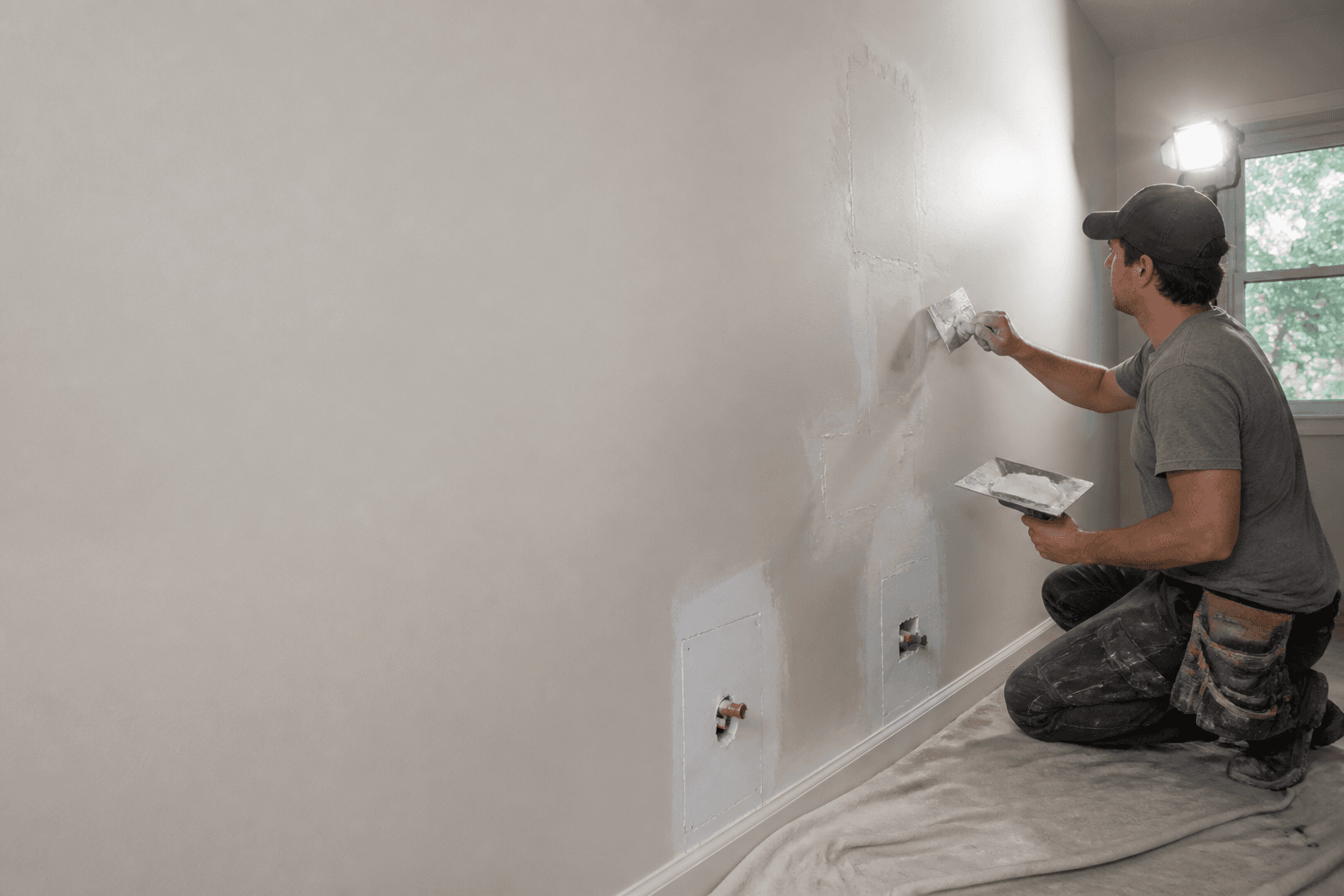
Drywall Repair & Patching After Poly B Replacement in Burnaby
Seamless drywall patching, texturing, and finishing after poly b pipe replacement — walls restored to pre-work condition.
Replacing poly B plumbing requires wall access. What happens to your walls after the pipes are in is just as important as the pipe work itself — rough patches, mismatched textures, and visible repairs leave a home looking like the job isn't finished. Our drywall repair service is part of every poly B replacement we do in Burnaby: we open the walls, we fix the pipes, and we restore the walls to a condition that's ready for paint.
Access for poly B replacement typically requires cutting drywall at key points along the pipe runs — behind fixtures, at junction points, and at any location where the routing requires more than a small inspection hole. In a single-family Burnaby home, a full repipe might involve anywhere from a handful of patches to several dozen access cuts depending on the pipe routing and the age of the home's construction.
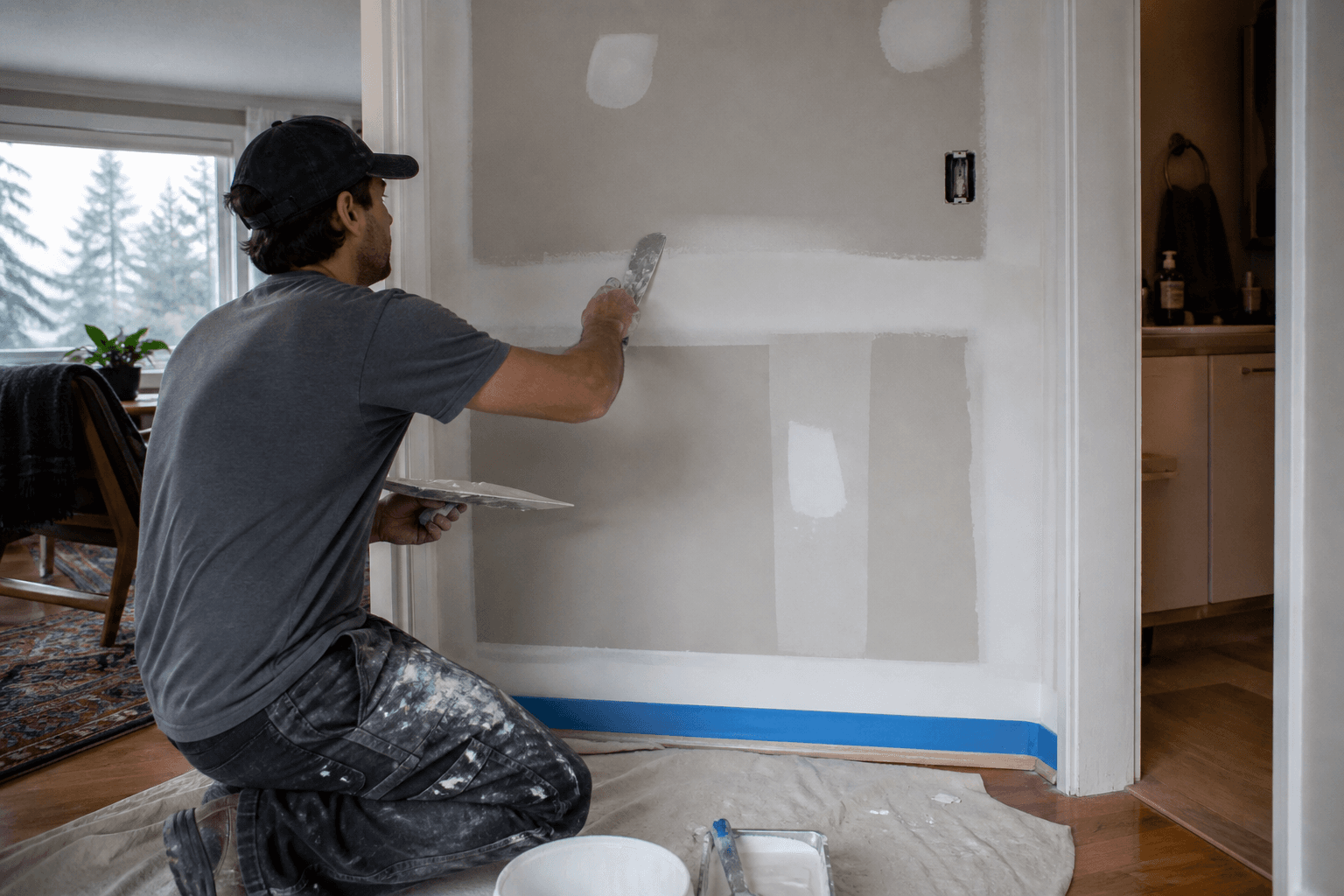
The drywall repair process follows a specific sequence that, when done properly, produces results you can't distinguish from the original wall. Patches are cut to clean edges and backed properly before the new drywall is installed — floating patches without backing lead to cracks. Tape and mud are applied in multiple coats, feathered out well beyond the patch perimeter so the transition blends completely once the wall is primed.
Texture matching is the most skill-dependent part of the repair. Burnaby homes built in the poly B era typically have one of three surface profiles: smooth, knockdown, or a light orange-peel texture. We assess the existing texture on surrounding surfaces and match it closely before priming. The result is a surface that reads visually as unpatched — no ridges, no depressions, no visible joints.
Every access point opened during a poly B replacement is closed and restored to this standard. You won't be handed a list of patches to sort out with a separate contractor. The full restoration is part of the job we quote and the job we complete.
What's Included — Drywall Repair After Pipe Replacement
- All access cuts patched with properly backed drywall
- Multi-coat tape and mud for seamless blending
- Texture matching — smooth, knockdown, or orange-peel
- Primed and paint-ready on completion
- No need to hire a separate drywall contractor
- Available as part of any poly B replacement in Burnaby
Poly B replacement that leaves your walls looking like new — that's the standard we hold to in every Burnaby home we work in. Get your quote today.
Get a Free Quote
For drywall repair after pipe replacement in Burnaby and Metro Vancouver.
Related Services
Common Questions
Poly B Pipe Replacement FAQ — Burnaby & Metro Vancouver
Everything homeowners ask us about polybutylene pipe replacement, insurance requirements, and what the process involves.
Does poly B piping need to be replaced?
Yes. In British Columbia, poly B has been flagged as a high-risk material by virtually every major home insurer — meaning you either replace it on your schedule, or your insurer forces the issue on theirs. Beyond insurance, the material has a well-documented failure mode: chlorine in municipal water gradually embrittles the pipe walls from the inside out, and the acetal plastic fittings are prone to sudden cracking once they've aged. There's no reliable way to inspect poly B for internal deterioration without cutting it open. If your Burnaby home was built between 1978 and 1995, the pipe is now 30 to 50 years old, well past the point where most plumbing engineers consider it low-risk. The question isn't really whether to replace it. It's whether that happens on your timeline or after a flood.
When was poly-B piping banned in Canada?
Polybutylene pipe was never banned through a single piece of legislation in Canada — it quietly lost its approval in provincial plumbing codes through the late 1990s and early 2000s. The turning point came in the United States, where a $950 million class action settlement in 1995 (Cox v. Shell Oil Co.) effectively ended North American production of polybutylene pipe and fittings. Canadian manufacturers followed as the material was removed from approved-materials lists. The National Plumbing Code of Canada no longer listed polybutylene as an approved supply material by the time of its 2005 edition, and most provincial codes — including BC's — had already removed it before that. So while there's no single ban date, new poly B installations have been code non-compliant in British Columbia since the late 1990s.
Can you sell a house with poly-B piping?
Legally, yes — but you'll pay for it in one form or another. In British Columbia, sellers are required to disclose known material defects, and poly B's documented failure history almost certainly qualifies. Expect any buyer's home inspector to flag it. From there, buyers typically do one of three things: request a price reduction to cover replacement, make replacement a condition of the sale, or walk away when their insurer or lender won't cover the property. Buyers financing the purchase often find that their mortgage lender's insurance requirements include poly B replacement before funding is released. Replacing poly B before listing removes that leverage from buyers entirely, can speed up the sale, and lets you control the cost rather than negotiate it under pressure. In the current Burnaby market, a properly documented poly B replacement is a genuine selling advantage.
What piping can be used instead of polybutylene pipe?
PEX-A (cross-linked polyethylene) is the most widely used replacement material in Burnaby and across Metro Vancouver. It's flexible, highly resistant to freezing, approved by all major BC insurance providers, and its expansion-style fittings create joints that are actually stronger than the pipe itself. Copper is the other proven choice — used in residential plumbing for over a century, universally accepted by insurers and inspectors, and the preferred option in some higher-end or exposed-piping applications. For most Burnaby homes, PEX-A is the practical recommendation because of its flexibility when routing through existing wall cavities during a repipe. Copper makes more sense in specific configurations or where long-term aesthetics matter. PEX-B is a third code-compliant, insurer-accepted option in BC, though it's less flexible than PEX-A and uses a different fitting system. We'll recommend the right material for your specific home and budget when we do the inspection.
What is poly B pipe and why does it need to be replaced?
Poly B (polybutylene) is a grey plastic piping material installed in approximately 700,000 Canadian homes built between 1978 and 1995. It was widely used in Burnaby and throughout Metro Vancouver during this era. Over time, the material degrades when exposed to chlorine in municipal water, causing the pipe walls to become brittle and prone to cracking, pinhole leaks, and sudden bursts. Most home insurers in BC now require poly B replacement as a condition of coverage — or charge significantly higher premiums if it remains in place.
How do I know if my home has poly B plumbing?
Poly B pipe is typically grey or occasionally black, with a dull, plastic appearance. It connects to grey, white, or copper fittings and is often labelled 'PB' followed by a four-digit number on the pipe itself. Common locations include the utility room, under sinks, behind toilets, and in crawl spaces. If your home was built in Burnaby or Metro Vancouver between 1978 and 1995, there's a strong chance it has poly b piping. The only way to know for certain is a professional poly b inspection.